Ansare Likens Danaher's Coaching to Guardiola's Barcelona
Does a coach make champions by teaching moves, or by teaching a way of thinking? Davis Ansare argues for the second answer, and he uses John Danaher and Barcelona's youth academy to make the case.
Ansare moved from Norway to Austin, Texas, in 2022 to train under Danaher, after years of studying his teachings. He set out the comparison in a video.
Drills That Leave Room for Problem-Solving
Ansare starts from a weakness of standard BJJ classes. A coach shows a technique, and students repeat it with a cooperative partner. That teaches movement. A match is different, because opponents resist, react and change what is available.
He points to creativity drills as Danaher's answer. Athletes get a scenario, an objective and a principle to explore, for example chest-to-chest control with head position as the main tool. The partner offers light resistance, so the athlete has to adapt and cannot run a fixed sequence.
The Barcelona counterpart, in his telling, is the rondo. Players stand in a circle and try to keep the ball from one or more defenders, which forces quick choices about space and pressure. Ansare links it to ecological, constraints-led training in BJJ, where Greg Souders is a prominent advocate. He does not say drilling should disappear: repetition and exploratory work may both help athletes.
One Philosophy Across a Whole Squad
Ansare names Gordon Ryan, Garry Tonon, Eddie Cummings and Nicky Ryan as the original Danaher Death Squad. They were talented, he says, but also shared a technical philosophy. A student in the documentary he cites puts it this way: "We all are taught by John and we all follow the same ideas and the same philosophy of jiu-jitsu."
Ansare reads this as the core of his argument. Individual games could differ while the underlying logic stayed the same, which let athletes build on each other's discoveries.
How Leg Locks Got a Structure
Danaher developed his methods at Renzo Gracie Academy in New York. Ansare says he skipped isolated techniques and linked grappling into systems that explain why a move works.
A conversation with Dean Lister was a turning point. Lister asked a question that spread through BJJ: "Why would you ignore 50% of the human body?" Leg locks already existed, Ansare says, but Danaher thought they lacked the order found in positional jiu-jitsu. So he brought control, positional progression and leverage to attacks on the legs.
The Academy Behind the Comparison
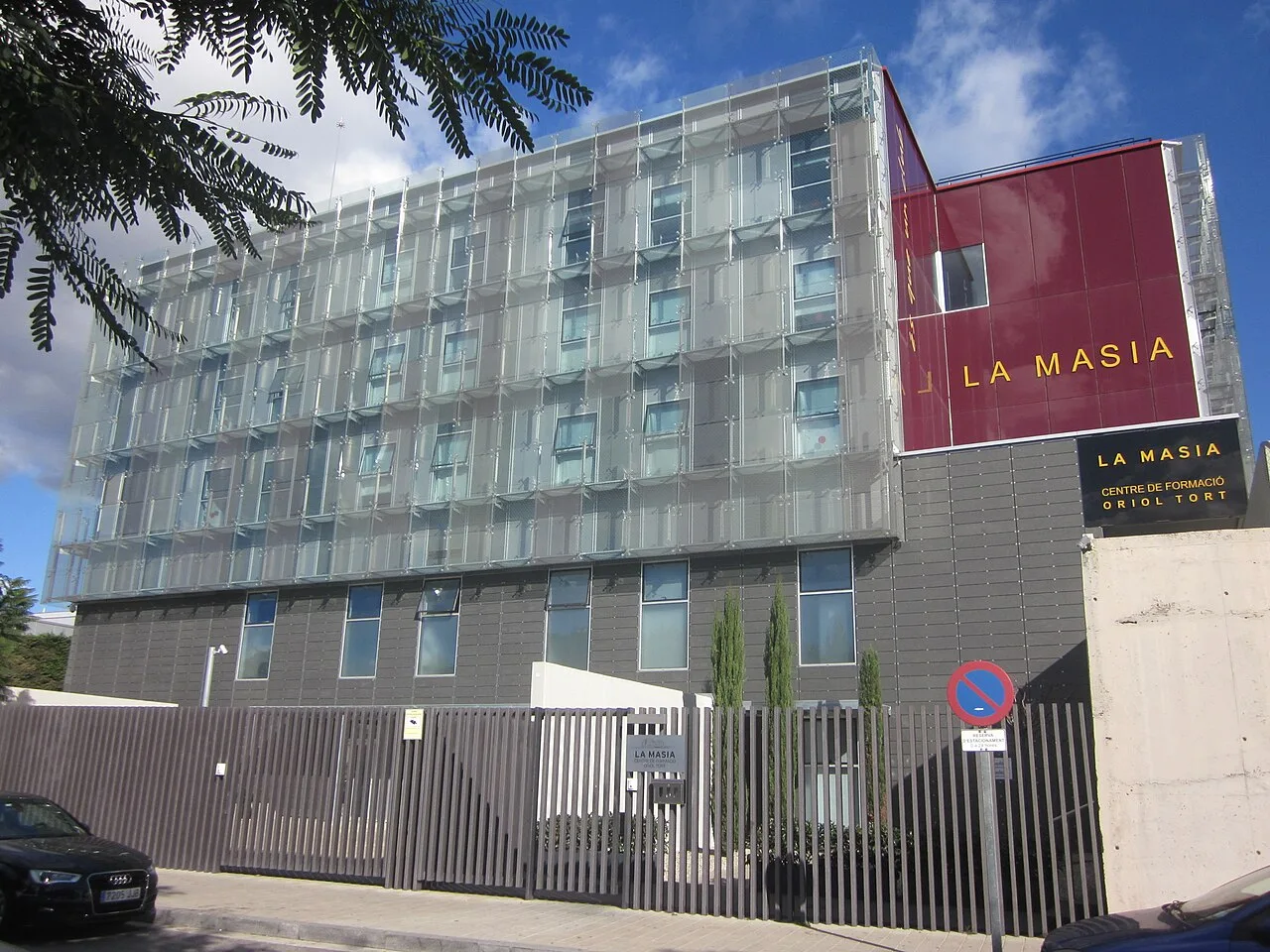
For the football side, Ansare goes to La Masia. In his view its output was not just a matter of signing gifted children. Players grew up inside one philosophy, largely from Johan Cruyff, with his ideas about possession, positioning and passing.
Guardiola lived that path. He joined La Masia at 13, later played under Cruyff and then managed Barcelona.
After the Split: B-Team and New Wave
The original squad later broke up, and two teams emerged in Austin. B-Team became a commercial academy with a public face and wide reach on social media. Danaher's New Wave team began with a more private model.
The two camps went on to meet in some of the largest professional grappling matches. Ansare notes that both came out of the same technical environment, and he offers that as another echo of Barcelona, where a philosophy outlasted its architects.
Source: BJJ Eastern Europe